
If you’re choosing an ecommerce platform in 2026, you’re not just choosing where your store lives; you’re deciding how your business will operate, scale, and handle complexity over time.
And that’s where Shopify becomes an interesting option. On the surface, it looks simple & easy setup, clean interface, quick launch. But once you start digging deeper, you realize Shopify is designed around a very specific philosophy: “Reduce technical friction, even if it means limiting flexibility.”
For some businesses, that’s exactly what they need, and for others, that trade-off becomes a constraint.
So instead of generic pros and cons, let’s break this down the way it actually shows up when you’re running a store.
Where Shopify Works Extremely Well
The biggest advantage of Shopify isn’t a feature; it’s how quickly it removes complexity from your day-to-day operations.

You don’t have to think about hosting, security patches, server crashes, or performance optimization at a deep technical level. All of that is handled in the background. And that changes how you operate as a business owner.
Instead of managing infrastructure, you focus on selling; this becomes especially valuable in two situations.
First, when you’re launching, Speed matters more than perfection. Shopify lets you go live fast, test ideas, and iterate without heavy investment.
Second, when you’re scaling, Stability starts to matter more than flexibility. During high-traffic events, product drops, and seasonal spikes, you don’t want to worry about whether your site will hold up.
Shopify is built for that reliability. Another area where Shopify performs well is its ecosystem; there’s a mature app marketplace, strong integrations, and a large developer community. So even if something isn’t built-in, there’s usually a way to extend the platform without building everything from scratch.
And then there’s the upgrade path, you can start small and move into Shopify Plus as your needs grow. That continuity matters more than people expect, because migrating platforms later is rarely simple.
Where Shopify Starts to Feel Restrictive
The same thing that makes Shopify easy, its structured system, is also where its limitations show up.

At some point, you’ll want your store to behave in a very specific way; Not visually, but functionally. Maybe your pricing logic is complex, maybe your checkout needs to adapt based on customer type, maybe your operations don’t follow a standard ecommerce flow.
This is where Shopify pushes back. You can customize a lot, but not everything. And when you hit those boundaries, you’re usually left with two options: use apps or adjust your process.
That’s why many Shopify stores end up relying heavily on third-party apps. At first, it feels like flexibility. But over time, it can turn into dependency, multiple tools handling different parts of your store, increasing cost and sometimes slowing things down.
Another limitation becomes visible around checkout. On standard plans, checkout is intentionally controlled. Shopify optimizes it for simplicity and conversion, but that also means you can’t fully customize how it works. For most stores, this is fine. But if you’re actively working on CRO at a deeper level, it can feel limiting.
And then there’s cost; not upfront, but over time. Shopify itself is straightforward, but once you add apps, transaction fees, and operational tools, your monthly cost stack grows. It’s not necessarily a problem, but it’s something you need to manage once you scale.
The Trade-Off Most People Don’t Realize
This is the part most comparisons don’t explain clearly. When you look at Shopify, it’s easy to assume it’s trying to compete on flexibility, like giving you complete control over everything. But that’s not really its goal.

Shopify is designed to be operationally efficient, not infinitely customizable. And that’s a very intentional choice.
Instead of giving you unlimited control, it gives you a structured environment where most things already work the way they’re supposed to. You don’t spend time figuring out how to make basic ecommerce functions stable; they just are. Payments, checkout flow, performance, security; these are handled in a way that reduces decision-making on your end.
For a lot of businesses, that’s a huge advantage. Fewer moving parts mean fewer chances for things to break. Your team spends less time troubleshooting and more time focusing on growth. Campaigns go live faster, operations stay predictable, and scaling feels more controlled.
But that structure comes with a trade-off: when you want something very specific, a custom pricing logic, a unique checkout behavior, or a non-standard workflow, you may not always be able to shape it exactly the way you want. At that point, you’re either adapting your process or finding more efficient workarounds.
So the real question isn’t whether Shopify is powerful or not. It’s whether this balance between speed and control actually fits how your business operates and how you plan to grow.
Shopify in 2026: Why It Still Dominates
Ecommerce in 2026 isn’t just about having a website anymore; Customers expect speed without thinking about it. They expect the buying process to feel obvious, not something they have to figure out. If anything slows them down or creates confusion, they leave often without a second thought.
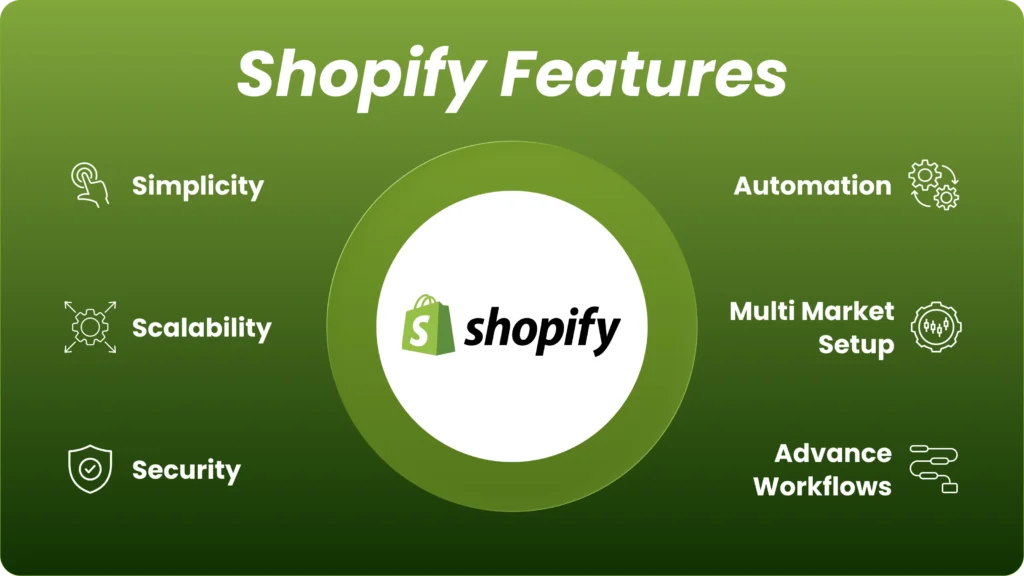
And the truth is, they don’t care what platform you’re using; they only care how easy it is to buy from you. This is exactly where Shopify fits well. Shopify has always been opinionated about how ecommerce should work. The way products are structured, how checkout flows, how payments are handled, a lot of it follows patterns that are already proven to convert. That’s why many Shopify stores feel familiar and easy to navigate, even if you’ve never visited them before.
That consistency is not accidental; it’s built around reducing friction in the buying journey.
But what’s interesting is how Shopify is evolving without losing that foundation. Over the past few years, it has started giving more flexibility where it actually matters through better APIs, improved automation, and tools like Shopify Functions. So while the core system remains structured, you now have more room to adapt it as your business grows.
And when that growth brings more complexity, whether it’s B2B, multiple markets, or advanced workflows, Shopify Plus steps in to fill those gaps.
So Shopify’s dominance in 2026 isn’t just because it’s easy to use; it’s because it balances simplicity and scalability in a way that aligns with how modern ecommerce actually works: fast, frictionless, and increasingly driven by efficiency.
So, Is Shopify Right for Your Brand?
This decision has less to do with your industry and more to do with how your business actually operates.
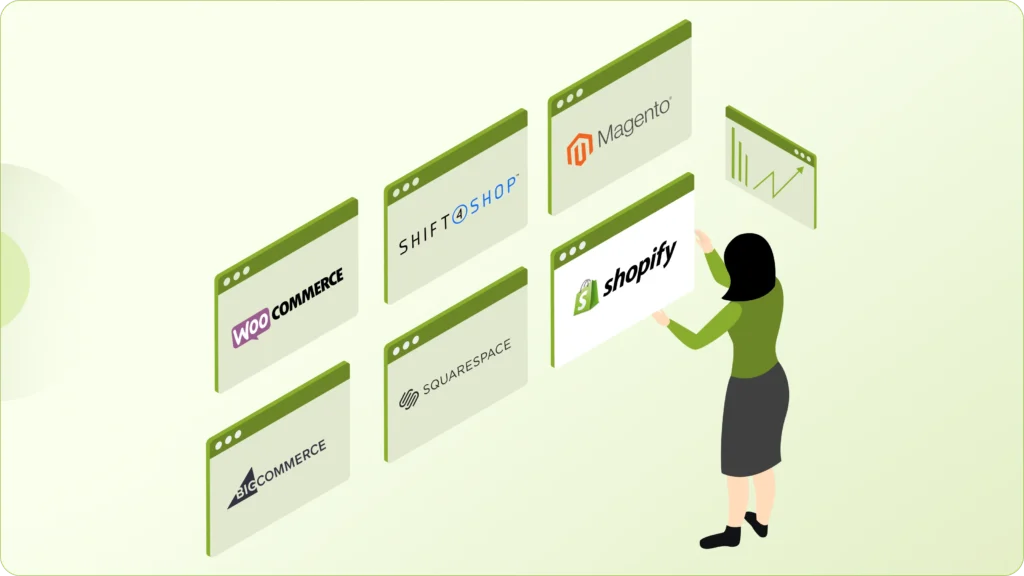
Shopify works best when your priority is speed, stability, and a system that removes technical overhead. If you want something that “just works” without constantly needing maintenance or troubleshooting, it’s one of the strongest options available.
It’s also a great fit for businesses with relatively standard ecommerce flows, even at scale. Whether you’re selling D2C, running campaigns, or managing steady growth, Shopify can handle it as long as the store is structured properly from the start.
Where things start to feel different is when your requirements go beyond that. If your operations are deeply custom, whether it’s complex pricing models, unique checkout logic, or workflows that don’t follow a typical ecommerce pattern, all of that is possible with Shopify Plus without any boundaries.
So the better way to look at this isn’t “Is Shopify good or bad?”
It’s whether its balance of simplicity & flexibility aligns with how your business needs to run, both today and as you scale.
The Real Decision You’re Making
Choosing Shopify isn’t just a technical decision; it’s a strategic one that shapes how your business runs behind the scenes.

Because what you’re really choosing here is a way of operating. Shopify is built around ease of use, reliability, and speed of execution. It removes a lot of the technical weight so you can move faster, launch quicker, run campaigns without friction, and keep your store stable as traffic grows.
And for most brands, that’s a very smart trade. Instead of spending time managing systems, you spend time improving what actually drives revenue: your product, your messaging, and your customer experience.
But that trade-off only works if you’re aware of it upfront. Because in exchange for that speed and simplicity, you’re accepting a certain level of structure. You won’t have complete freedom over every part of the system, especially as your requirements become more specific.
So the real decision isn’t just “Should you use Shopify?” It’s whether this balance, with less complexity in exchange for controlled flexibility, fits how you want to build and scale your business.
Final Thought
There’s no such thing as a “perfect” ecommerce platform. There’s only the one that fits how your business operates today and how you expect it to evolve over time.
Shopify is powerful, no doubt. But its real strength shows up when your strategy aligns with how the platform is built. When that alignment is there, things feel smooth, your store runs reliably, your team moves faster, and your customers get a frictionless buying experience.
But if that alignment is missing, even a strong platform can start to feel limiting.
That’s why the smarter approach isn’t chasing the “best” platform. It’s choosing the one that supports how you sell, how you scale, and how much control you actually need along the way.
Thinking About Building or Scaling on Shopify?
If you’re planning to build or improve your Shopify store, the focus shouldn’t just be on design or features.
It should be on how easily your customer can move from landing on your store to completing a purchase.
→ If you want, we can review your current setup and identify where Shopify can be helpful.