
B2B ecommerce has changed not just in terms of technology, but in how your buyers actually behave.
There was a time when buying in B2B meant long email threads, waiting for quotes, and going back and forth with sales reps just to place an order. That process worked earlier because speed wasn’t the priority.
Today, it is. Your buyers are used to fast, seamless online experiences in their everyday life. So when they come to your store, they expect the same; something that’s clear, quick, and easy to navigate without needing constant support.
And if your store doesn’t meet that expectation, they won’t complain or give feedback; they’ll simply move to someone who makes it easier.
That’s the real shift. In 2026, B2B ecommerce isn’t about just “having a website”. It’s about building a system that actually helps your customers buy faster, reorder easily, and make decisions without friction.
Because at the end of the day, the easier you make it to buy, the more likely they are to come back.
Let’s break down the features that actually matter now.
1. Self-Service Buying (Without Needing a Sales Rep)
This is probably the biggest shift happening in B2B right now.
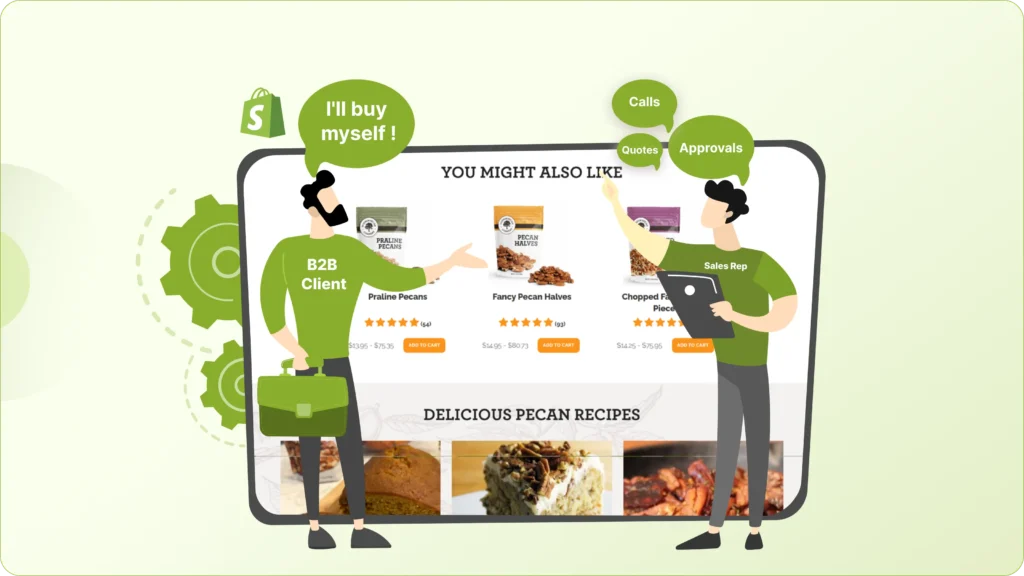
Buyers don’t want to wait for quotes, calls, or approvals just to place a simple order. If they already know what they need, they expect to log in, check their pricing, place the order, and move on.
Think about a customer who orders the same materials every month. If they still have to send an email, wait for a response, confirm details, and then place the order, it starts to feel like unnecessary effort. Not because the process is broken, but because it’s slower than it needs to be.
Now compare that with a store where they can simply log in, see their custom pricing, reorder in a few clicks, and manage everything on their own.
That’s a completely different experience. And this is exactly where modern B2B ecommerce is heading. More and more buyers now prefer rep-free buying, where they don’t need to talk to sales unless it’s actually required.
Platforms like Shopify are already supporting this with customer portals and self-service capabilities that give buyers more control over how they purchase.
Because in B2B, the easier you make it for customers to buy, the more likely they are to keep coming back.
2. Smart Reordering and Bulk Buying Made Easy
B2B buying is never about a single product purchase.
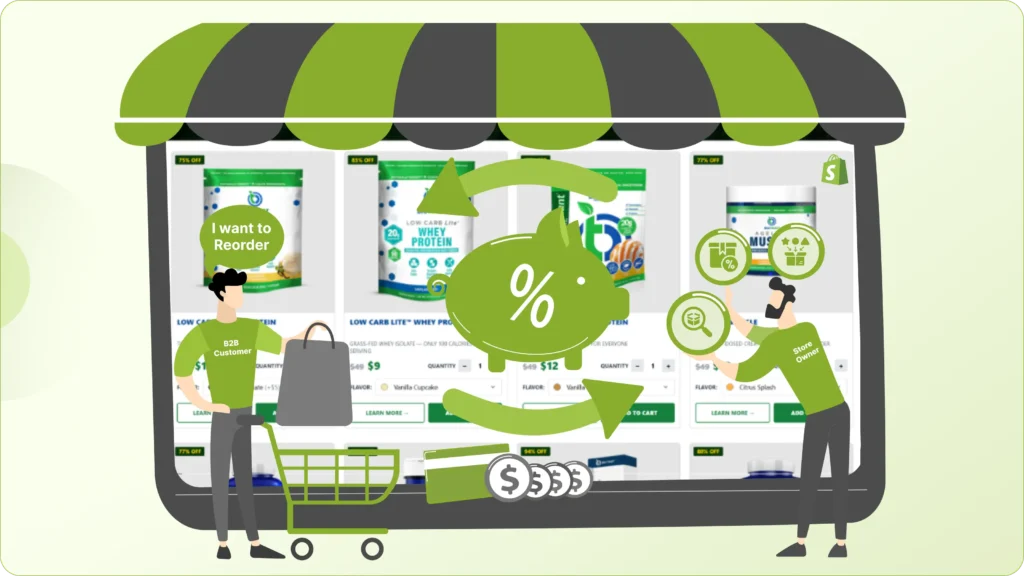
Most of the time, your customers are ordering multiple SKUs, in bulk, and doing it regularly. And if your store makes that process slow or repetitive, it starts to feel like a task rather than a smooth transaction.
Think about a retailer who’s restocking inventory. They already know what they need. They don’t want to search for each product again, select variants, and rebuild the entire order from scratch every time. That’s just friction.
What they really want is simple. The ability to repeat a previous order, adjust quantities if needed, and complete the purchase within minutes.
When your store supports that, through features like quick reordering, saved lists, or easy access to order history, the experience feels effortless.
And that has a direct impact on your business. Because the easier it is for customers to reorder, the more consistently they will.
3. Custom Pricing, Payment Terms, and Buyer Roles
B2B is never one-size-fits-all. Every customer relationship is different. Some have negotiated pricing, some order in bulk regularly, and others work on specific payment terms. On top of that, buying decisions are often shared across multiple people within the same company.
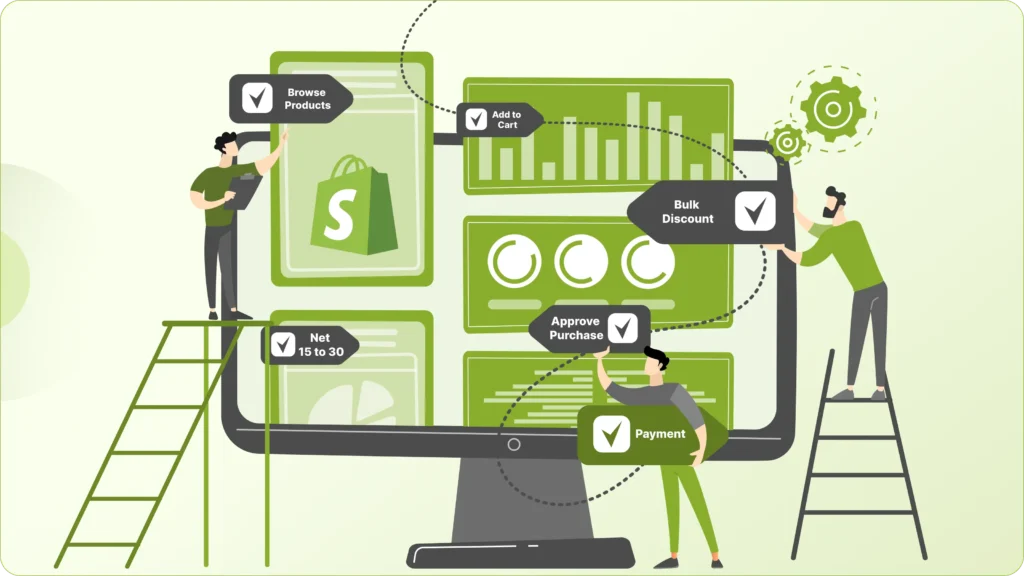
In 2026, this kind of flexibility isn’t a premium feature anymore, it’s expected.
Think about a typical B2B customer. One person might be responsible for browsing and adding products to the cart, someone else needs to approve the purchase, and another person handles the payment. If your store doesn’t support this flow, it forces them to step outside the system, which slows everything down.
The same goes for pricing and payments. If a returning customer logs in and doesn’t see their agreed pricing, or can’t use their usual payment terms like Net 15 or Net 30, it immediately creates friction.
Modern ecommerce setups are designed to handle this more naturally. They allow you to show customer-specific pricing, apply bulk discounts automatically, and support multiple users under a single company account with structured roles and permissions.
When your store reflects how your customers actually operate, the buying process feels smooth and familiar. When it doesn’t, even simple transactions start to feel unnecessarily complicated.
4. AI-Powered Product Discovery and Personalization
Search is changing. Buyers don’t want to spend time digging through large catalogs or applying endless filters just to find what they’re looking for. They expect your store to guide them in the right direction.
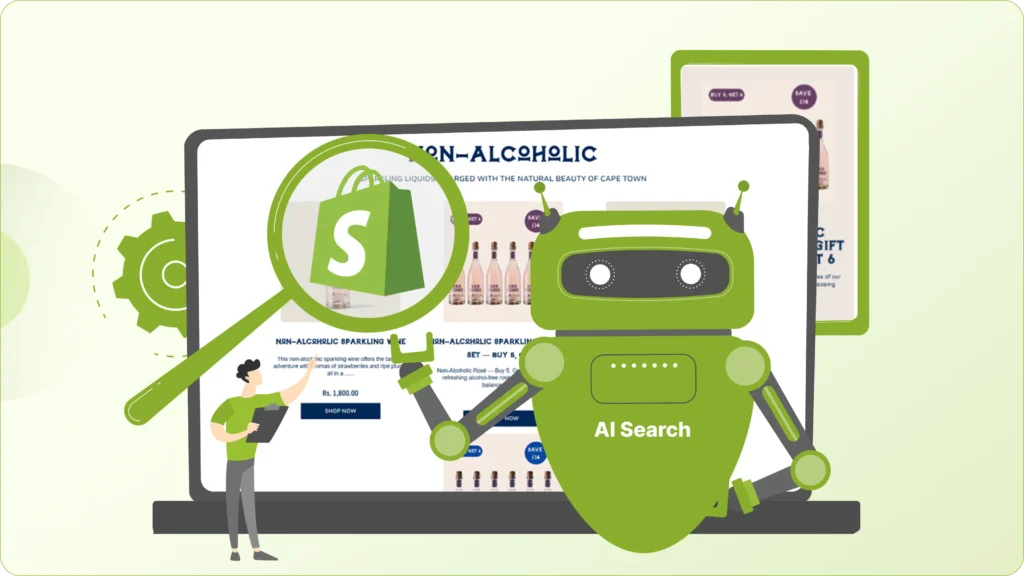
This is where AI is starting to make a real difference in B2B ecommerce. Instead of making users do all the work, your store can now surface relevant products based on their behavior, past orders, or common buying patterns.
For example, if a customer regularly orders certain items together, those combinations can be shown upfront. If something is out of stock, suggesting a suitable alternative keeps the buying process moving instead of stopping it.
Think about a buyer searching for industrial parts. Without any assistance, they might have to scroll through hundreds of SKUs, apply filters, and still spend time figuring out what fits best. But with a smarter setup, your store can immediately highlight the most relevant options, suggest commonly purchased combinations, and even recommend replacements based on previous orders.
The experience feels less like searching and more like being guided. And that has a direct impact; when customers find what they need faster, they make decisions quicker, and that often leads to higher order values as well.
Check more about this in our Agentic Commerce blog.
5. Mobile-First Experience (Not Just Responsive)
This is where a lot of B2B stores still fall behind. There’s still an assumption that buyers will sit at a desk to place orders.
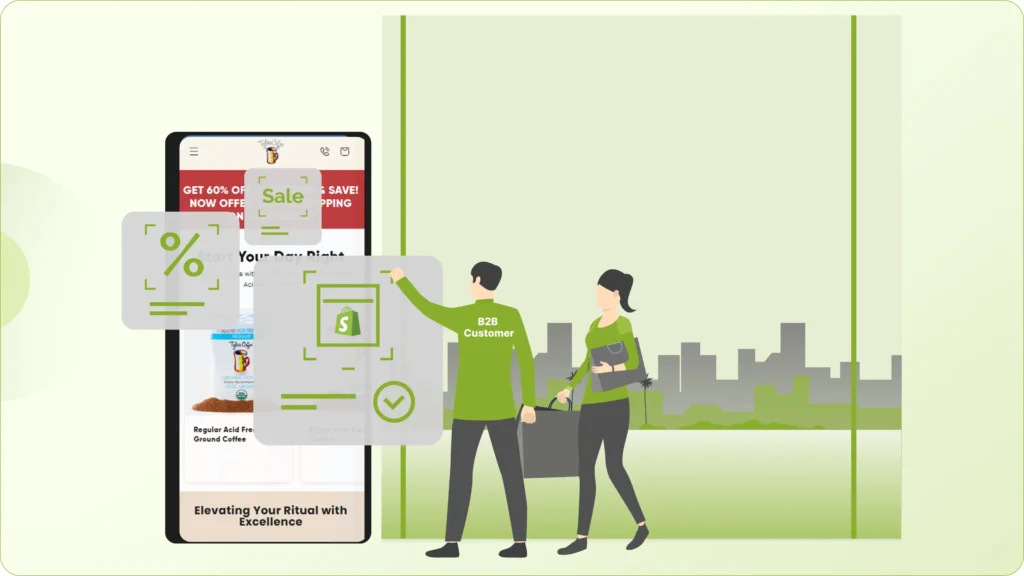
But in reality, many of them are on the move, in warehouses, on-site, or quickly checking something between tasks. And in those moments, they’re using their phones. That changes everything about how your store needs to work.
A mobile-friendly layout alone isn’t enough. The experience has to feel natural on a smaller screen. Actions like placing an order, repeating a previous purchase, or checking account details should be quick and effortless, not something that requires zooming, scrolling endlessly, or struggling with forms.
Think about someone trying to place an order in a busy environment. If it takes too long, or if the interface feels even slightly frustrating, they won’t push through it. They’ll delay it. And delayed orders often turn into missed opportunities.
A strong mobile experience isn’t just a design improvement, it directly affects how quickly and consistently your customers can buy from you.
You can know more about this from here.
6. Seamless Integration with ERP, CRM, and Operations
B2B ecommerce doesn’t work in isolation.
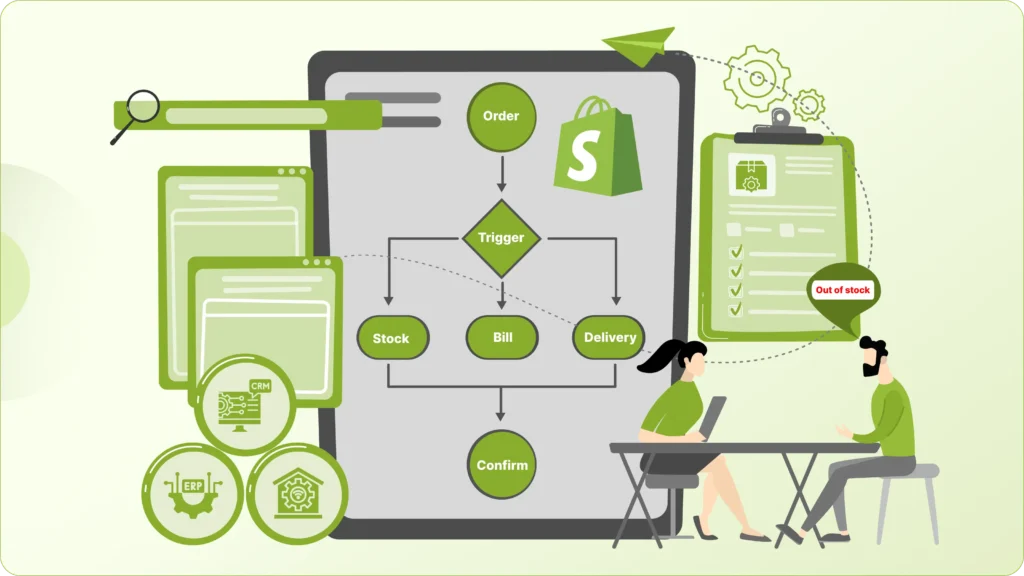
Your store is just one part of a much larger system. Orders, inventory, pricing, and customer data all need to stay aligned with what’s happening in your backend tools like ERP, CRM, and warehouse systems.
When these systems aren’t connected properly, issues start to show up very quickly. You might end up selling products that are actually out of stock. Orders may need to be processed manually. Fulfillment gets delayed, and teams spend more time fixing problems than moving things forward.
Not because anything is broken, but because everything is disconnected.
That’s why businesses are now focusing heavily on integrating their ecommerce setup with the rest of their operations. When your Shopify store is properly connected, orders flow automatically, inventory stays accurate, and customer data remains consistent across systems.
It doesn’t just make things faster; it makes them more reliable.
And this is where ecommerce starts doing more than just bringing in orders. It starts saving time, reducing errors, and supporting how your business runs behind the scenes.
7. Flexible and Customizable Checkout for B2B Needs
Checkout in B2B is not as straightforward as it is in B2C.
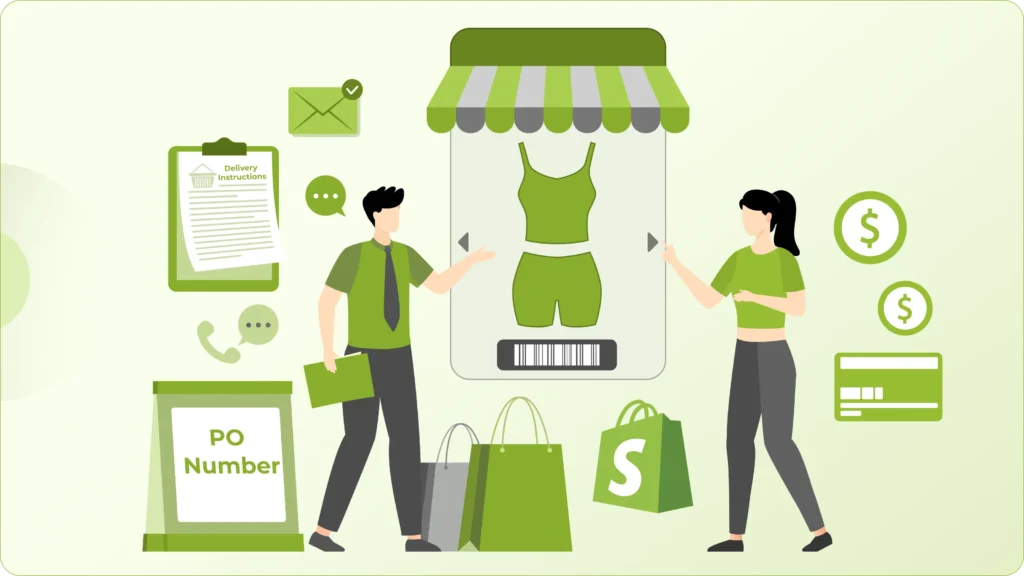
There are usually internal processes involved. Buyers may need to add purchase order numbers, follow approval steps, apply negotiated pricing, or include specific delivery instructions before completing an order.
If your checkout doesn’t support these needs, customers are forced to step outside the flow, maybe by sending emails, double-checking details, or delaying the purchase altogether.
And that’s where friction starts to build.
Think about a buyer who’s ready to place an order but can’t add a PO number or follow their company’s approval process within your checkout. Even if everything else works perfectly, that one gap can stop the entire transaction.
Modern B2B ecommerce is moving towards more flexible checkout experiences. Shopify, for example, is evolving to support customizable checkout flows where you can add logic, fields, and conditions based on the type of customer.
Because at the end of the day, if your checkout doesn’t match how your customer’s business actually works, they simply won’t complete the order.
8. Transparency in Delivery, Pricing, and Operations
B2B buyers today expect clarity at every step.
Before placing an order, they want to know exactly what they’re paying, when they’ll receive it, and what happens after the purchase. Not as an afterthought, but upfront, while they’re making the decision.
Think about it from their perspective. If pricing feels unclear, if shipping costs suddenly appear at the end, or if delivery timelines are vague, it creates hesitation. Not because they don’t want the product, but because they’re unsure what to expect.
And in B2B, that uncertainty matters a lot more. A delayed delivery or unexpected cost doesn’t just affect one order; it can impact their whole operations, timelines, or commitments to their customers.
That’s why transparency is no longer optional. Clear pricing, accurate delivery estimates, and easy order tracking have become basic expectations.
Because when everything is clear, decisions happen faster. And when it’s not, even interested buyers start to hold back.
So, What Does This Mean for Your Shopify Store?
If you look at all of this together, a clear pattern starts to emerge. B2B ecommerce is moving towards speed, clarity, and independence.
Your buyers don’t want to spend time figuring things out. They want to find what they need quickly, make decisions with confidence, and complete purchases without depending on back-and-forth communication.
And platforms like Shopify are evolving fast to support exactly that kind of experience.
But here’s where most stores get it wrong. The Store doesn’t struggle because it lacks features. In fact, many stores already have the right tools in place.
The real issue is how those features come together. If the experience feels confusing, slow, or disconnected, even the best features won’t help.
Because at the end of the day, it’s not about what your store has. It’s about how easy it makes it for someone to buy.
The Bottom Line
In 2026, these features are no longer “advanced.” They’re expected.
If your B2B store still relies on manual processes, unclear flows, or outdated user experience, it’s not just a gap; it’s the friction your customers feel every time they try to buy from you.
And the reality is, they won’t try to work around it. They’ll choose the option that feels easier.
Because in e-commerce, the businesses that win are not the ones with the most features. They’re the ones that make buying feel simple.
Want to Build or Upgrade Your B2B Shopify Store the Right Way?
Whether you’re planning to launch a B2B store, improve your current setup, or simplify a complex buying experience, the goal should stay the same: “Make it easier for your customers to buy”.
If your store feels slow, manual, or harder to navigate than it should be, there’s a clear opportunity to fix that, and that’s exactly where the right structure, UX, and Shopify setup make all the difference.
No worries if you’re not sure where to start,
Whether it’s CRO improvements, a complete redesign, or building a custom store from scratch;
→ Let’s talk and figure out what actually works for your business.