
Something big is changing in e-commerce. Not in a loud and overnight way, but in a quiet and structural way.
For years, AI has played a supporting role in online shopping. Chatbots handled customer queries. Recommendation engines suggested products based on browsing history. Search bars got smarter. AI helped customers discover. It made things faster. Slightly easier. A bit more personalised, but the responsibility of choosing, comparing, and completing a purchase still needs a human.
Sooner, this too is going to be changed in the future. We’re moving towards a phase where AI doesn’t just assist the shopping journey, it solely executes it. Instead of browsing ten websites, reading reviews, comparing specs, checking delivery timelines, and applying coupon codes, a customer will simply list their requirements once.
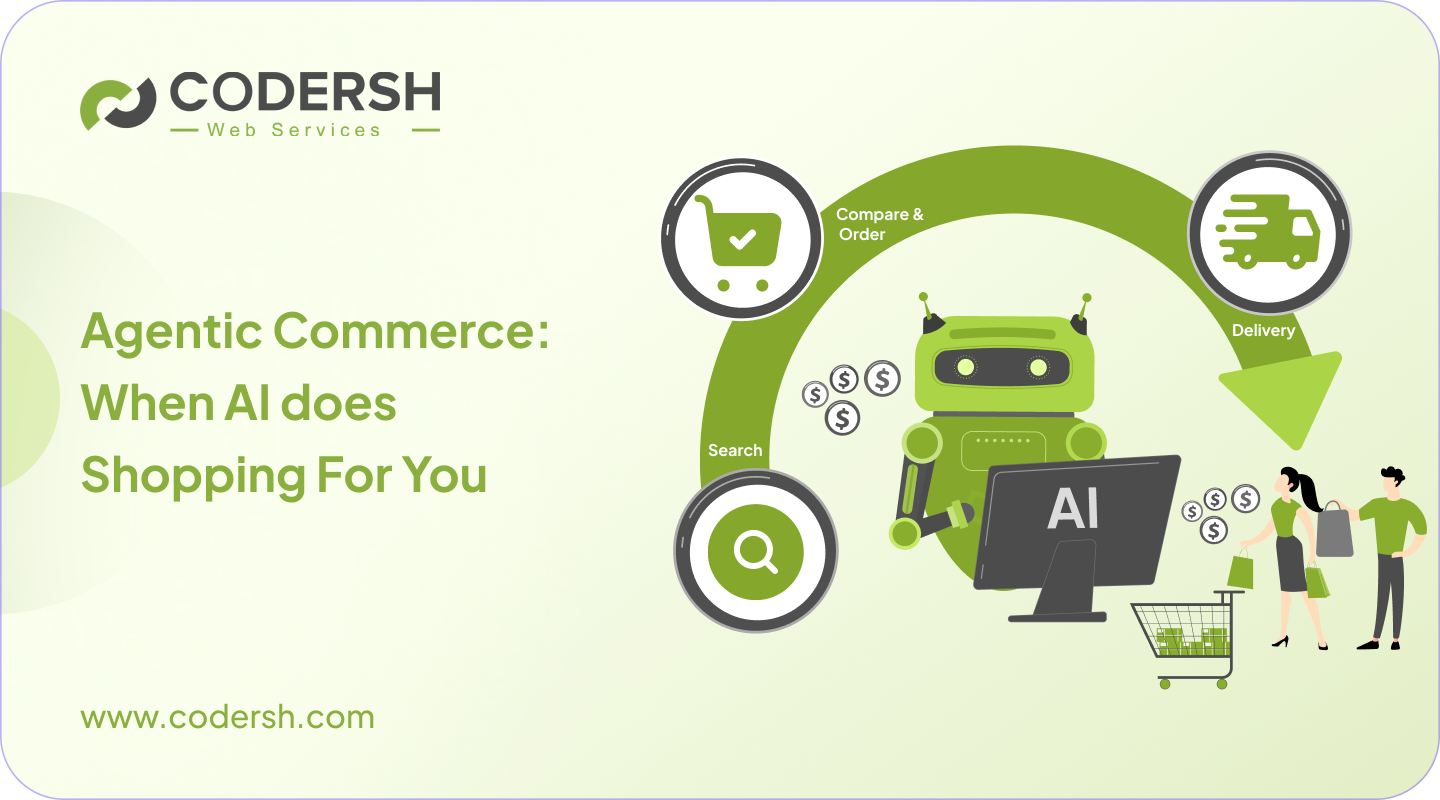
And the system will handle the rest of the process: From Search, Compare, and Decide to Buy eventually.
This is the shift toward agentic commerce, where AI moves from being a helper in the journey to becoming an active participant in the transaction itself.
It doesn’t replace e-commerce, but it will change due to who or what is navigating it. And that changes everything.
So, What is Agentic Commerce Actually?
In simple terms, Agentic commerce is when AI agents can search, compare, decide, and buy products on behalf of customers.
Not just suggest, not just recommend, but actually complete the purchase.
Imagine telling an AI:
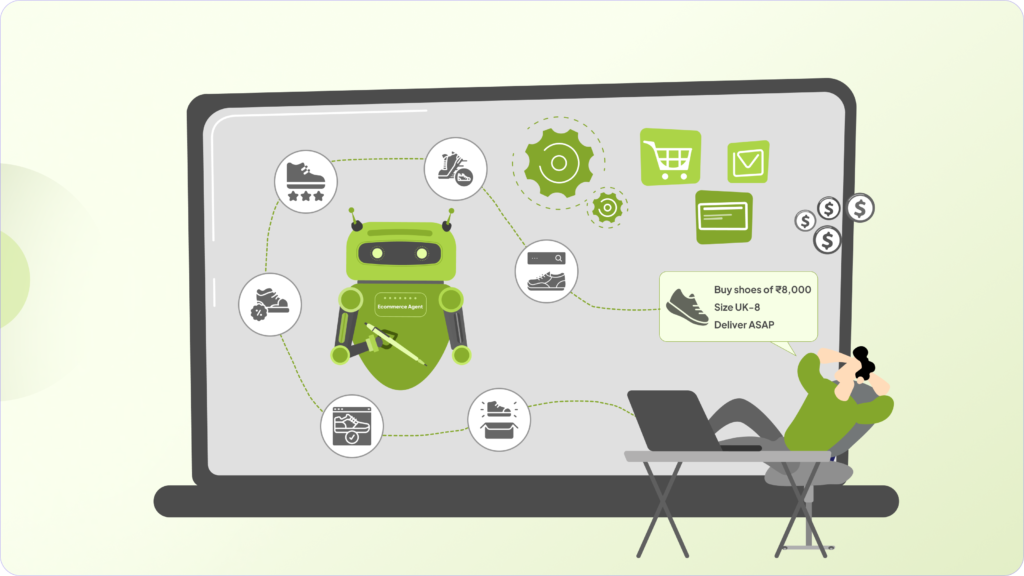
“Buy me running shoes under ₹8,000 with a UK 8 size and deliver before Friday.”
And instead of giving you links, it will:
- Search multiple stores
- Compare options
- Check reviews
- Apply discounts
- Use your saved preferences
- Complete checkout
All on its own, that’s agentic commerce.
The Three Stages of AI in Ecommerce
AI in e-commerce hasn’t evolved randomly. It has moved through three distinct stages, each redefining how customers interact with brands.
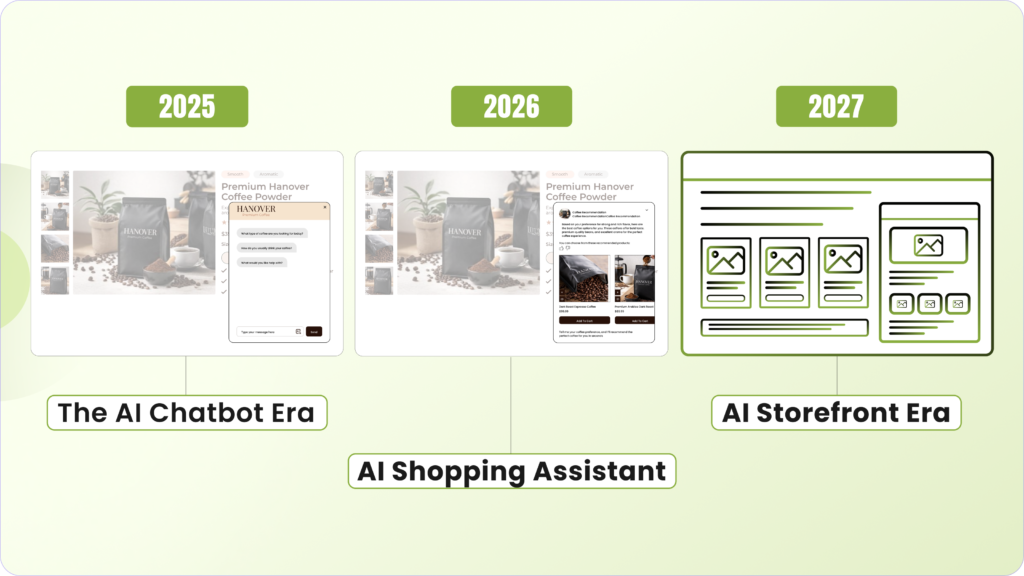
Chatbots (The Support Layer: Our Past)
In the early phase, AI functioned as a reactive support tool. It answered FAQs, tracked orders, handled return queries, and reduced customer service load. While being useful, it operated at the edge of the buying journey. It didn’t influence discovery or purchasing decisions; it simply responded when asked.
Shopping Assistants (The Decision Layer: Our Present)
The next stage introduced AI into product discovery and evaluation. Instead of just answering questions, AI began guiding choices. Customers could describe what they wanted in natural language, and the assistant would filter products, compare options, personalise recommendations, and explain trade-offs. AI shifted from reactive to proactive by helping customers decide rather than just responding.
Autonomous Storefronts (The Execution Layer: Our Future)
The emerging stage moves beyond assistance into autonomy. Here, AI doesn’t just recommend products; it completes the transaction. A user expresses intent once, and the agent searches across stores, evaluates pricing and reviews, applies discounts, selects delivery options, and finalises checkout. The traditional ecommerce funnel compresses into a single intent-driven action. In this model, brands will no longer be competing only for human attention; rather, they will be competing for algorithmic selection.
As this progression continues, ecommerce shifts from human-led browsing to agent-driven execution. What began as support automation is evolving into a fully autonomous E-commerce layer.
Why 2026 Is the Tipping Point
AI adoption isn’t theoretical anymore. It’s already part of how people shop.
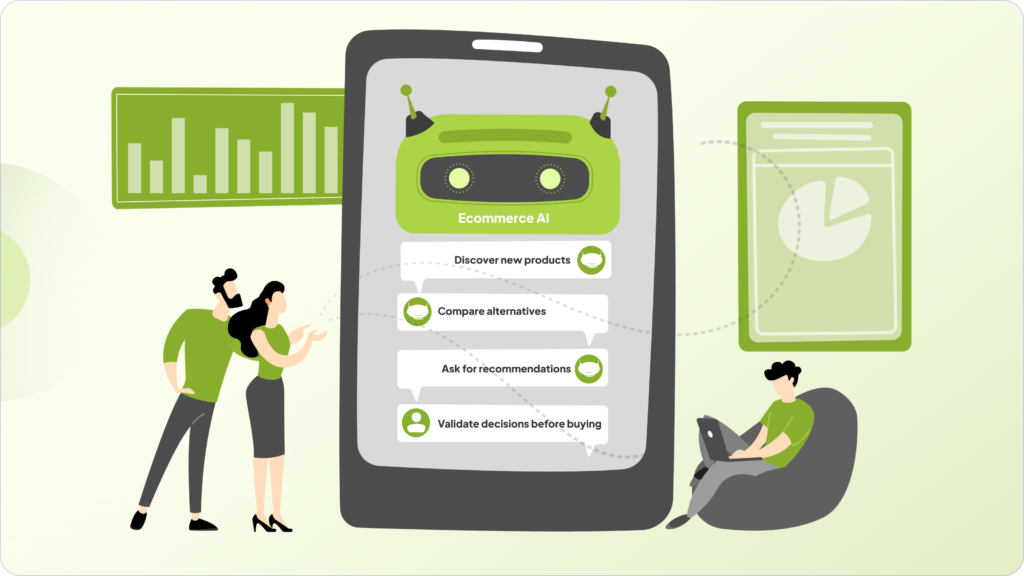
Customers are using AI tools to:
- Discover new products
- Compare alternatives
- Ask for recommendations
- Validate decisions before buying
What started as experimentation is becoming a habit. At the same time, the infrastructure behind ecommerce is also evolving. Platforms are exposing cleaner APIs, payment systems are becoming more flexible, and Product data is getting more structured.
These changes may not be visible to customers, but they matter. They make it technically possible for AI systems to move beyond advice and into execution.
This is the transition phase, AI first helped you decide; now it can help you buy. Soon, it will buy for you; within the rules and preferences you set, this progression will be subtle, but significant.
Because once AI can reliably execute transactions, the role of the consumer shifts from navigating options… to defining only their intent. And that’s what makes this a tipping point.
What This Means for Ecommerce Brands
Here’s the part most brands haven’t fully realised yet.
Your next “customer” might not actually be a person browsing your website. It could be an AI agent making decisions on someone’s behalf.
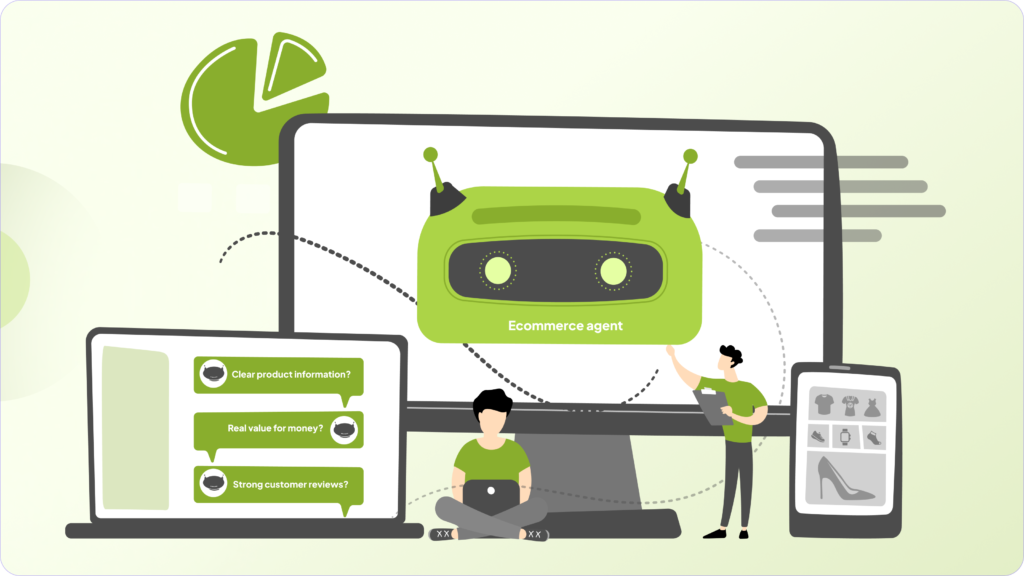
And that changes quite a few things, like product discovery won’t always start with a human scrolling through pages, and comparison won’t necessarily happen by someone opening ten tabs. Instead, an AI agent may quickly analyse several options and narrow them down based on what actually matters for the buyer.
When that happens, many of the things ecommerce brands traditionally focus on become less important. Fancy animations, overly clever copy, or emotional storytelling may not influence an AI agent the way they influence a human shopper.
What matters the most is clarity. Clear product information, real value for money, strong customer reviews, and reliable delivery start to carry more weight.
In a world where AI agents are helping people shop, the brands that present their products clearly and honestly will have a much better chance of being chosen.
This Isn’t the End of Branding
This shift doesn’t mean branding suddenly stops mattering.
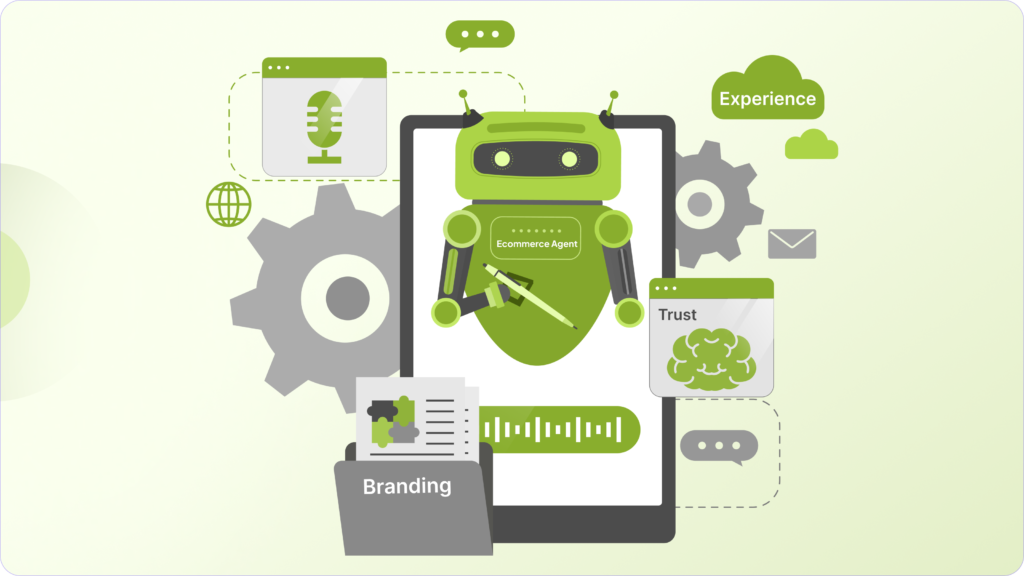
People will still buy with emotion in categories like luxury, lifestyle, and fashion, and high-consideration purchases will always depend on trust, perception, and the connection a brand builds with its audience. AI can help with the research, but the final decision in those cases will often still be made by a human.
Where things are likely to change more dramatically is in routine buying, such as when someone needs to restock household essentials, replace a basic product, or buy something purely functional; here, convenience and value matter more than brand storytelling. In those situations, letting an AI agent quickly find the best option and place the order becomes very appealing.
So agentic commerce isn’t replacing ecommerce, it’s simply changing how different types of purchases happen with AI handling the routine decisions, while brands continue to win on trust, experience, and identity, where human choice still matters most.
The Real Question
Agentic commerce isn’t some distant future idea.
The building blocks are already being developed. AI is becoming a normal part of how people search, compare, and decide what to buy. The next step is simply letting that AI complete the purchase as well.
So the real question isn’t “whether this shift will happen or not?”
It’s “When AI starts shopping for your customers…will your store be ready for it?”
Because when this happens, the stores that are easiest for machines to understand, evaluate, and transact with will naturally have an advantage.
And the brands that prepare early will be the ones that benefit the most.
Want to prepare your Shopify store for how people (and AI) will shop next?
Explore our Shopify CRO Service that focuses on clarity, usability, and better conversions.